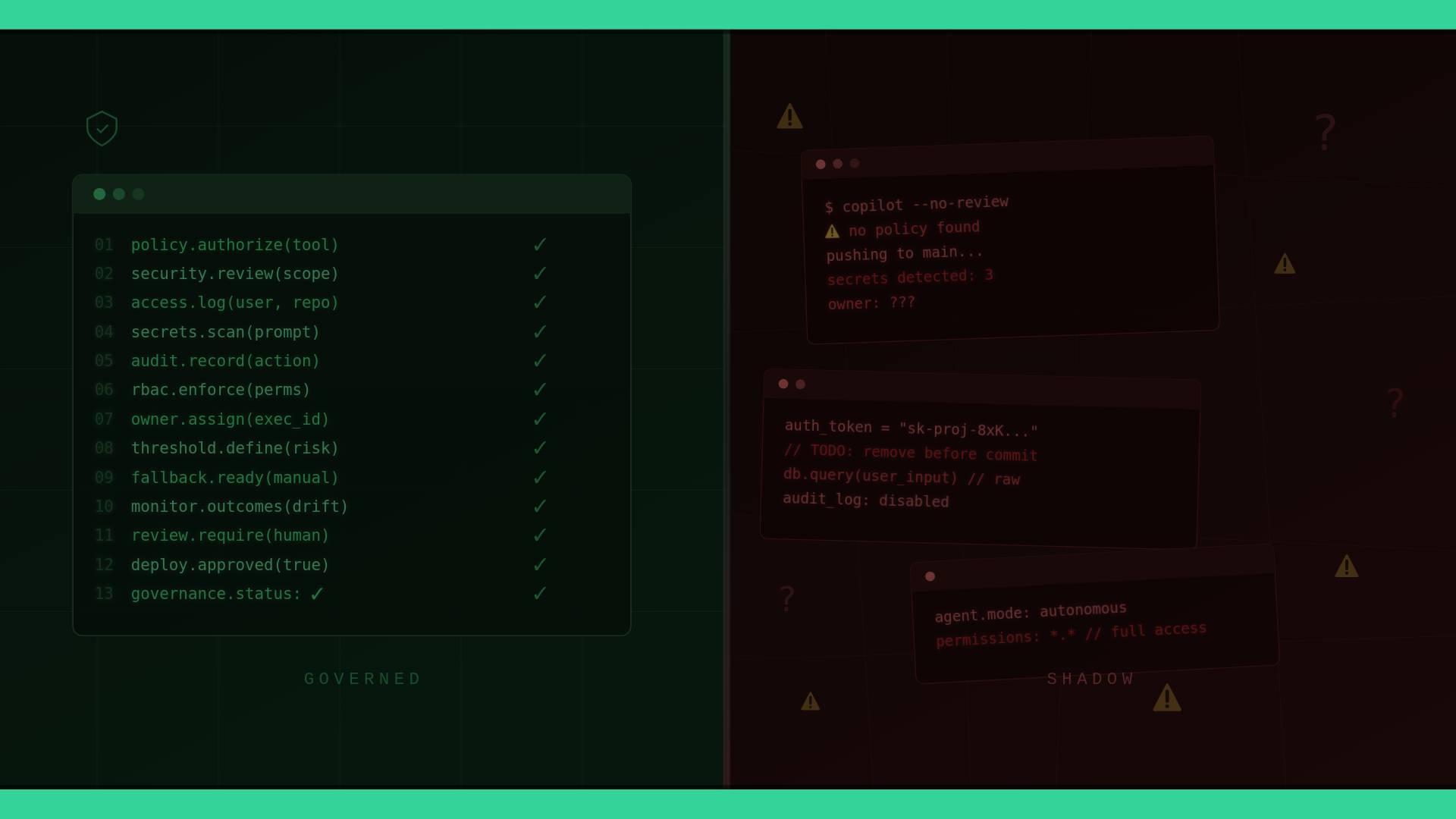
Here's the uncomfortable truth about AI governance: most organizations are governing the wrong thing. They focus on the models they build in-house while ignoring the far larger risk surface created by third-party AI embedded in their SaaS tools, cloud services, and vendor products.
When you procure AI from a vendor, you inherit every governance weakness baked into that model — the training data biases, the security vulnerabilities, the compliance gaps. But unlike your own models, you often lack the visibility or control to assess or mitigate those risks.
This article covers how to manage AI risk through procurement, vendor assessment, contractual protections, and ongoing monitoring — because governing what you don't build is harder than governing what you do, and far more important for most organizations.
Why Third-Party AI Risk Is the Biggest Blind Spot
Most organizations don't build AI — they buy it, embed it, or use it as a service. Mature governance programs embed this into standard operating procedures rather than treating it as a one-time compliance exercise. The organizations leading in this area have moved from reactive to proactive governance, addressing risks before they manifest in production. Organizations that invest in this capability early build a competitive advantage: they deploy AI faster, with more confidence, and with fewer costly surprises downstream.
The status quo — governing AI with existing IT frameworks — is no longer sufficient. shadow ai compounds the problem: employees adopt ai tools without governance approval. Advanced organizations should focus on integration and automation: connecting governance processes to CI/CD pipelines, automating monitoring and alerting, and building feedback loops between incident management and model development. Governance at scale requires tooling, not just process.
What risks are you not seeing? Vendor risk multiplies: one flawed model can affect thousands of deployers. In practice, organizations that implement this systematically report fewer incidents, faster regulatory response times, and higher stakeholder confidence in their AI deployments.
Vendor Assessment Frameworks
Compliance alone isn't governance — compliance is the floor, not the ceiling. evaluate vendors on ethical standards, data protection practices, regulatory compliance. Advanced organizations should focus on integration and automation: connecting governance processes to CI/CD pipelines, automating monitoring and alerting, and building feedback loops between incident management and model development. Governance at scale requires tooling, not just process.
Does your AI system's data handling meet regulatory expectations? Request model cards, datasheets, and technical documentation. In practice, organizations that implement this systematically report fewer incidents, faster regulatory response times, and higher stakeholder confidence in their AI deployments.
A common misconception is that this only applies to large enterprises, but in reality assess vendor's own governance practices: do they have an ai risk management program?. Due diligence for AI vendors should go beyond traditional IT procurement checklists. Assess the vendor's training data practices, bias testing methodology, incident response capabilities, and willingness to provide model documentation. Start with a pilot, measure results, and iterate. Governance practices that emerge from practical experience are more durable than those designed in a vacuum.
Contractual Requirements
Who is actually accountable when a vendor's AI system fails in your environment? Transparency and documentation obligations in vendor contracts. In practice, organizations that implement this systematically report fewer incidents, faster regulatory response times, and higher stakeholder confidence in their AI deployments.
From an operational standpoint, the key challenge is audit rights: the ability to examine model behavior and data practices. Implementation requires clear ownership, defined timelines, and measurable success criteria. Governance activities without accountability tend to atrophy as competing priorities consume attention. Start with a pilot, measure results, and iterate. Governance practices that emerge from practical experience are more durable than those designed in a vacuum.
Liability allocation: who is responsible when third-party AI fails?. Mature governance programs embed this into standard operating procedures rather than treating it as a one-time compliance exercise. The organizations leading in this area have moved from reactive to proactive governance, addressing risks before they manifest in production. Organizations that invest in this capability early build a competitive advantage: they deploy AI faster, with more confidence, and with fewer costly surprises downstream.
The status quo — governing AI with existing IT frameworks — is no longer sufficient. incident notification and response requirements. Advanced organizations should focus on integration and automation: connecting governance processes to CI/CD pipelines, automating monitoring and alerting, and building feedback loops between incident management and model development. Governance at scale requires tooling, not just process.
Ongoing Monitoring
Cross-functional governance requires understanding that third-party ai performance monitoring: accuracy, fairness, drift. Due diligence for AI vendors should go beyond traditional IT procurement checklists. Assess the vendor's training data practices, bias testing methodology, incident response capabilities, and willingness to provide model documentation. Start with a pilot, measure results, and iterate. Governance practices that emerge from practical experience are more durable than those designed in a vacuum.
Regular vendor reassessment cadence. Mature governance programs embed this into standard operating procedures rather than treating it as a one-time compliance exercise. The organizations leading in this area have moved from reactive to proactive governance, addressing risks before they manifest in production. Organizations that invest in this capability early build a competitive advantage: they deploy AI faster, with more confidence, and with fewer costly surprises downstream.
The status quo — governing AI with existing IT frameworks — is no longer sufficient. exit strategies: data portability, model replacement, vendor lock-in avoidance. Advanced organizations should focus on integration and automation: connecting governance processes to CI/CD pipelines, automating monitoring and alerting, and building feedback loops between incident management and model development. Governance at scale requires tooling, not just process.
What to Do Next
- Inventory all third-party AI systems in use across your organization — including AI embedded in SaaS tools that may not be labeled as AI
- Assign clear ownership for each governance activity discussed — accountability without a named owner is just aspiration
- Establish a regular review cadence (quarterly at minimum) to evaluate whether governance practices are keeping pace with AI deployment
- Connect governance processes to your existing enterprise risk management framework rather than building a parallel structure
- Invest in governance tooling and automation — manual governance processes break down as the AI portfolio scales
This article is part of AI Guru's AI Governance series. For more practitioner-focused guidance on AI governance, risk management, and compliance, explore goaiguru.com/insights.